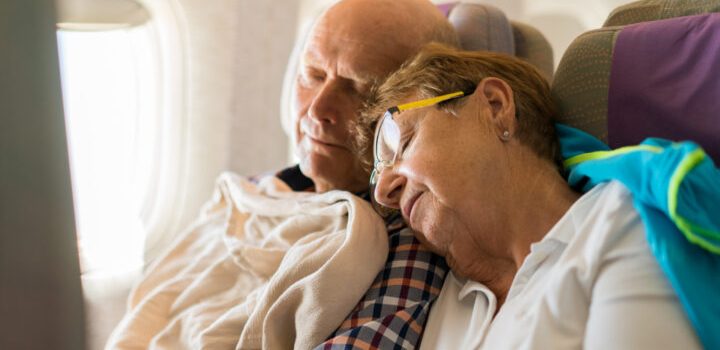
The “Flight Kit”: Survival Guide for the 8-Hour Flight from London/Paris/Amsterdam
For many of our distinguished guests at Irembo Holidays Safaris, the dream of an African safari—of witnessing the sun rise over the savannah, hearing the distant roar of a lion, or locking eyes with a mountain gorilla—is a lifelong ambition. We specialize in making these dreams a reality for seniors. However, we also know that when you are traveling from London, Paris, or Amsterdam, there is one giant hurdle between your armchair and the bush: the 8-to-11-hour long-haul flight.
We’ve heard the hesitant questions during our consultation calls: “Can we actually do this trip?” or “Will I be too exhausted to enjoy the safari once I arrive?”
The answer is a resounding YES, you can. An African safari is absolutely achievable, and it doesn’t have to start with a harrowing physical ordeal. The key isn’t found in endurance; it’s found in preparation. At Irembo, we believe the adventure begins not when you land, but when you begin de-risking the journey.
This is your ultimate “Flight Kit” Survival Guide. By packing smart and managing your body effectively during those hours in the air, you won’t just survive the flight from Europe; you will arrive refreshed, dignified, and ready for the magic that awaits you.
The Philosophy of “De-risking” Your Journey
When we talk about “de-risking” a long-haul flight for seniors, we are looking at three main areas of concern:
-
Medical Risks: Managing existing conditions, medication, and circulation (DVT).
-
Physical Comfort Risks: Preventing stiffness, dehydration, and exhaustion.
-
Psychological Risks: Reducing anxiety, ensuring entertainment, and maintaining a sense of control.
By addressing these systematically within your Carry-On “Flight Kit,” you turn the flight from a threat to your health into a simple, managed component of your vacation.
Chapter 1: The Essential Medical & Health Kit
This is the most critical section of your kit. If this section is right, you have mitigated 80% of the risk.
1. The 24-Hour Medication Strategy
Never, under any circumstances, pack your essential medications in your checked luggage. If your suitcase decides to take a vacation to Tokyo while you are heading to Entebbe, your health should not be compromised.
-
The Kit: Pack a transparent, dedicated pouch. Include all your prescription medications for the duration of your trip, plus an extra 5-day supply in case of unexpected delays.
-
The Documentation: Carry a physical copy of your prescriptions and a brief letter from your doctor summarizing your conditions. This is invaluable at customs or if you need medical assistance abroad.
-
The Schedule: If you are crossing multiple time zones, ask your pharmacist or doctor before you leave about the best way to adjust your medication timing.
2. The DVT Defense: Compression Socks
Deep Vein Thrombosis (DVT)—blood clots forming in deep veins due to immobility—is a valid concern on long flights.
-
The Kit: Wear medical-grade compression socks (15-20 mmHg or 20-30 mmHg, as recommended by your doctor). Do not buy cheap “travel socks” from the airport gift shop; get them from a pharmacy to ensure they have the correct graduated pressure. Put them on before you head to the airport.
3. Personal Hygiene & First Aid Pouch
Cabin air can be dry, making you more susceptible to germs.
-
The Kit: Hand sanitizer, sanitizing wipes (to wipe down your tray table and armrests), your preferred pain reliever (e.g., paracetamol or ibuprofen), and any personal items like eye drops or saline nasal spray to combat dryness.
Chapter 2: The Physical Comfort & Wellness Kit
The key to physical comfort is managing your micro-environment. You can’t control the seat size, but you can control how your body feels in it.
1. The Hydration Station
Dehydration is the primary cause of fatigue and jet lag. Airplane cabins have lower humidity than many deserts.
-
The Kit: Bring an empty, reusable water bottle through security and fill it up at the gate. Refuse alcohol and caffeine on the flight, as they are diuretics and will worsen dehydration. Aim to drink the equivalent of your filled bottle every three hours.
2. Layering for Thermal Control
Cabin temperatures are notorious for fluctuating between “arctic tundra” and “tropical greenhouse.”
-
The Kit: Do not wear one heavy coat. Wear loose, breathable layers. A base layer, a light sweater or cardigan, and a comfortable scarf or pashmina are ideal. Slip-on shoes are essential for ease at security, but bring cozy socks for the flight itself, as feet can swell and get cold.
3. The Sleeping Support System
Sleeping on a plane is tough, but creating a “sleep bubble” helps your body rest, even if you don’t fully conscious sleep.
-
The Kit: Invest in a high-quality, supportive neck pillow (memory foam or the specialized Trtl pillow), a contoured eye mask that doesn’t pressure your eyelids, and noise-cancelling headphones or high-quality earplugs.
Chapter 3: The Psychological Support & Entertainment Kit
An 8-hour flight can feel much shorter if your mind is engaged. Reducing anxiety is a key part of de-risking.
1. Digital Entertainment
Do not rely solely on the airline’s in-flight system. Sometimes they break, or they don’t have what you like.
-
The Kit: Your tablet, e-reader, or smartphone, fully loaded. Before leaving home, download several movies, TV series, audiobooks, and your favorite music.
-
The Power: Bring a small, lightweight portable power bank (external battery) and the necessary charging cables. Many long-haul planes have USB ports, but you should not rely on them.
2. Analog Joy
Giving your eyes a break from screens is important.
-
The Kit: A physical book or magazine, crosswords, Sudoku, or a small journal to jot down your first impressions of the journey.
3. A Strategic Snack Pouch
Airline meals are scheduled for their logistics, not your metabolism.
-
The Kit: Pack small, high-protein, non-perishable snacks like protein bars, nuts (unsalted to avoid dehydration), or dried fruit. This ensures your blood sugar stays stable if you don’t like the meal or if service is delayed.
Putting It All Together: Your Packing Tactics
Now that you know what to pack, let’s talk about how. You don’t want to be wrestling with a heavy carry-on bag in the overhead locker.
1. The Two-Bag Tactic
-
Bag A (Overhead): A lightweight wheeled cabin bag for items you only need once, like your main change of clothes for arrival.
-
Bag B (Personal Item – Under Seat): This is your Flight Kit. It should be a smaller tote, backpack, or messenger bag that contains everything listed above. It stays at your feet for easy, immediate access.
2. The Pouch System
Within your personal item bag, organize everything into distinct, clear pouches:
-
Pouch 1: Medications & Doctor’s Notes
-
Pouch 2: Toiletries & First Aid
-
Pouch 3: Electronic Cables & Power Bank
-
Pouch 4: Snacks
The Irembo Commitment: From the Gate to the Bush
We know that even with the most perfect Flight Kit, you will still be tired upon arrival. That is why the Irembo de-risking strategy doesn’t end when you land. We structure our safaris specifically to honor your journey.
1. The Calm Arrival
When you arrive in Entebbe, Kigali, or Kilimanjaro, you will not be navigating chaotic taxi ranks or confusing public transport. Our trusted Irembo guide will be waiting for you directly outside the arrivals hall with a clear sign, ready to help you with your luggage and whisk you away in a comfortable, private vehicle.
2. The “Soft Landing” Itinerary
We do not schedule a 6 AM game drive the morning after a long-haul flight. Our standard practice for seniors is to build in a “Soft Landing” day. You will spend your first night in a comfortable, quiet lodge near the airport. This gives you time to shower, have a proper meal, sleep in a real bed, and acclimatize before your safari adventure officially begins.
3. Personalized Pace
Our guides are trained to read their guests. If you are feeling fatigued, your guide will adjust the day’s pace. Safaris with Irembo are not about rushing to tick boxes; they are about enjoying the bush at a dignified, comfortable pace that suits you.
Conclusion: You Can Do This
The next time the thought “Can we actually do this trip?” crosses your mind, we want you to visualize your Flight Kit. See your medications organized, your compression socks ready, your favorite audiobook downloaded, and your supportive pillow packed.
You are not conquering the flight; you are managing it. You are taking the risk out of the journey so you can focus entirely on the reward. We are here to make that reward incredible.